| Newson, J., Stables, M., Karra, E., & others. (2014). Resolution of acute inflammation bridges the gap between innate and adaptive immunity. Blood, 124(11), 1748–1764. |
 
|
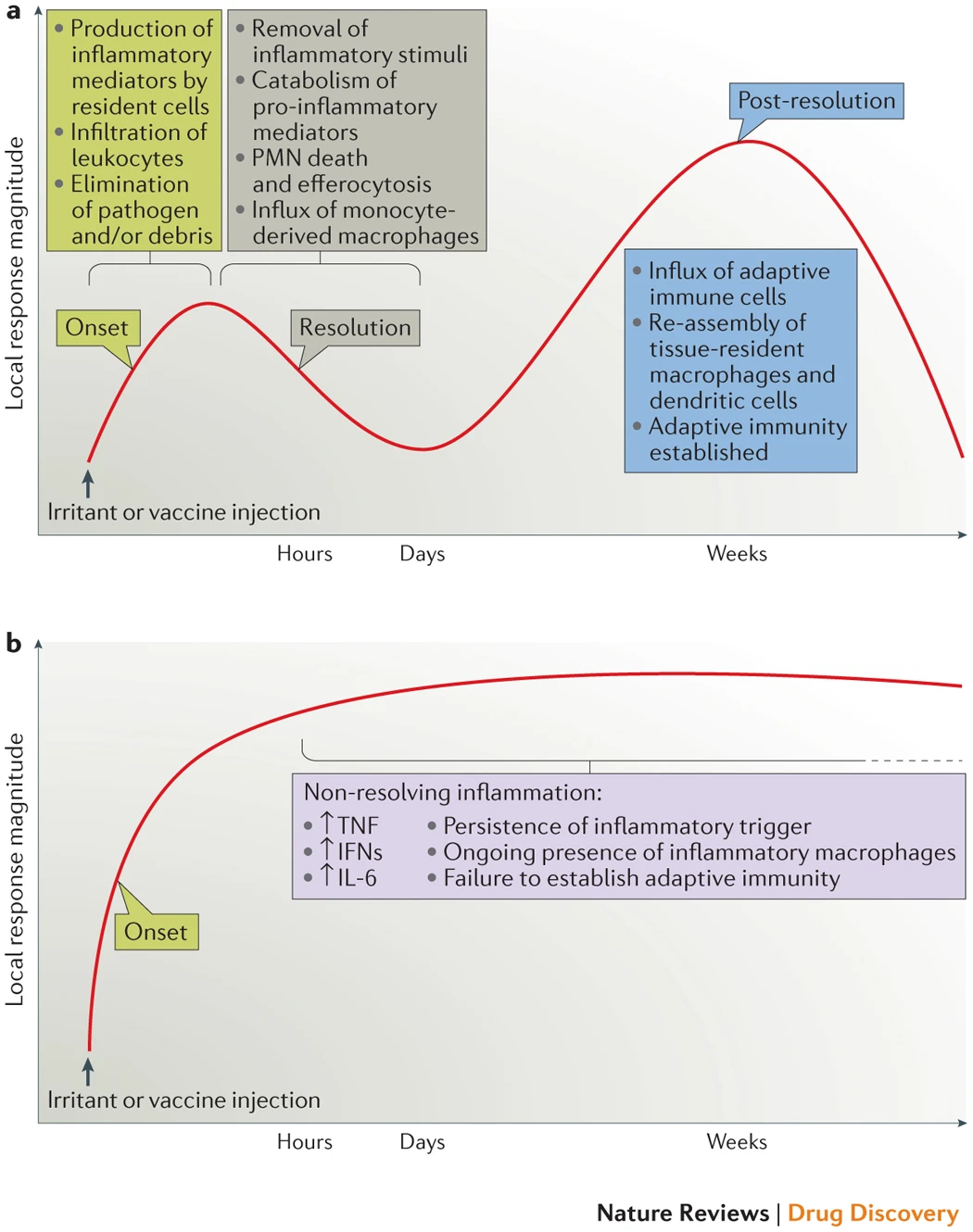
We have recently shown4 that resolution is not the end of the immune response to infection or injury, but rather that it acts as a bridge between innate and adaptive immunity, thereby adding a third phase after acute inflammation and resolution — namely, post-resolution (part a). Moreover, the idea that acute inflammation drives adaptive immunity also leads to an alternative explanation of the pathogenesis of some diseases that are driven by chronic inflammation (part b). Specifically, diseases driven by 'inflammation gone wrong' may arise from incomplete resolution of the initial acute response that, in turn, does not fully engage an appropriate adaptive immune response that would otherwise lead to full resolution. Thus, although many early-phase T helper 1-type cytokines have evolved to drive inflammation, their persistence may paradoxically derail resolution, resulting in impaired antigen clearance and the development of maladaptive immunity. IFN, interferon; IL-6, interleukin-6; PMN, polymorphonuclear cell; TNF, tumour necrosis factor.
https://www.nature.com/articles/nrd.2016.39/figures/1 |


