BioAcyl Corp

BioAcyl Corp |
|
 |
 |
 |
|
Weight, C. M., Venturini, C., & Pojar, S. (2019). Microinvasion by Streptococcus pneumoniae induces epithelial innate immunity during colonisation at the human mucosal surface. Nature Communications, 10(1), 3060. Added by: Dr. Enrique Feoli (16/11/2023, 16:47) Last edited by: Dr. Enrique Feoli (16/11/2023, 16:53) |
 |
| Resource type: Journal Article Published DOI: 10.1038/s41467-019-11005-2 ID no. (ISBN etc.): 2041-1723 BibTeX citation key: Weight2019 View all bibliographic details  |
Categories: BioAcyl Corp Subcategories: Meningitis Creators: Pojar, Venturini, Weight Collection: Nature Communications |
Views: 15/215
|
| Abstract |
|
Control of Streptococcus pneumoniae colonisation at human mucosal surfaces is critical to reducing the burden of pneumonia and invasive pneumococcal disease, interrupting transmission, and achieving herd protection. Here, we use an experimental human pneumococcal carriage model (EHPC) to show that S. pneumoniae colonisation is associated with epithelial surface adherence, micro-colony formation and invasion, without overt disease. Interactions between different strains and the epithelium shaped the host transcriptomic response in vitro. Using epithelial modules from a human epithelial cell model that recapitulates our in vivo findings, comprising of innate signalling and regulatory pathways, inflammatory mediators, cellular metabolism and stress response genes, we find that inflammation in the EHPC model is most prominent around the time of bacterial clearance. Our results indicate that, rather than being confined to the epithelial surface and the overlying mucus layer, the pneumococcus undergoes micro-invasion of the epithelium that enhances inflammatory and innate immune responses associated with clearance.
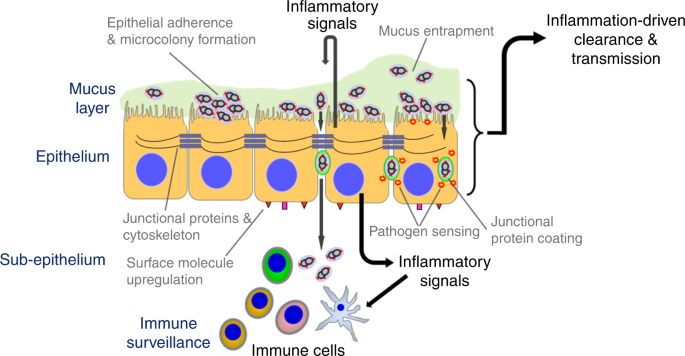
Model of pneumococcal colonisation at the human mucosal epithelium. Pneumococcal adhesion and micro-colony formation on the epithelial surface may lead to micro-invasion; internalisation of the bacteria and/or transmigration across the epithelial barrier (micro-invasion). The epithelial-derived response is dependent on the subsequent pattern of interactions. Micro-invasion amplifies epithelial sensing and inflammation/innate immunity, which we postulate leads to immune cell engagement. This process of epithelial sensing inflammation/innate immunity may enhance both clearance and transmission. Co-association with junctional proteins may facilitate migration across the barrier Added by: Dr. Enrique Feoli Last edited by: Dr. Enrique Feoli |
| Notes |
|
Number: 1 Publisher: Nature Publishing Group
|