BioAcyl Corp

BioAcyl Corp |
|
 |
 |
 |
|
Liu, C., Huang, J., & Li, H. (2016). Ghrelin accelerates wound healing through GHS-R1a-mediated MAPK-NF-κB/GR signaling pathways in combined radiation and burn injury in rats. Scientific Reports, 6(1), 27499. Added by: Dr. Enrique Feoli (20/05/2023, 12:21) Last edited by: Dr. Enrique Feoli (20/05/2023, 13:42) |
 |
| Resource type: Journal Article DOI: 10.1038/srep27499 ID no. (ISBN etc.): 2045-2322 BibTeX citation key: Liu2016 View all bibliographic details  |
Categories: BioAcyl Corp Subcategories: Wound Healing Creators: Huang, Li, Liu Collection: Scientific Reports |
Views: 4/150
|
| Abstract |
|
The therapeutic effect of ghrelin on wound healing was assessed using a rat model of combined radiation and burn injury (CRBI). Rat ghrelin, anti-rat tumor necrosis factor (TNF) α polyclonal antibody (PcAb), or selective antagonists of p38 mitogen-activated protein kinase (MAPK), c-Jun N-terminal kinase (JNK) and growth hormone secretagogue receptor (GHS-R) 1a (SB203580, SP600125 and [D-Lys3]-GHRP-6, respectively), were administered for seven consecutive days. Levels of various signaling molecules were assessed in isolated rat peritoneal macrophages. The results showed that serum ghrelin levels and levels of macrophage glucocorticoid receptor (GR) decreased, while phosphorylation of p38MAPK, JNK and p65 nuclear factor (NF) κB increased. Ghrelin inhibited the serum induction of proinflammatory mediators, especially TNF-α and promoted wound healing in a dose-dependent manner. Ghrelin treatment decreased phosphorylation of p38MAPK, JNK and p65NF-κB and increased GR levels in the presence of GHS-R1a. SB203580 or co-administration of SB203580 and SP600125 decreased TNF-α level, which may have contributed to the inactivation of p65NF-κB and increase in GR expression, as confirmed by western blotting. In conclusion, ghrelin enhances wound recovery in CRBI rats, possibly by decreasing the induction of TNF-α or other proinflammatory mediators that are involved in the regulation of GHS-R1a-mediated MAPK-NF-κB/GR signaling pathways.
Added by: Dr. Enrique Feoli Last edited by: Dr. Enrique Feoli |
| Notes |
|
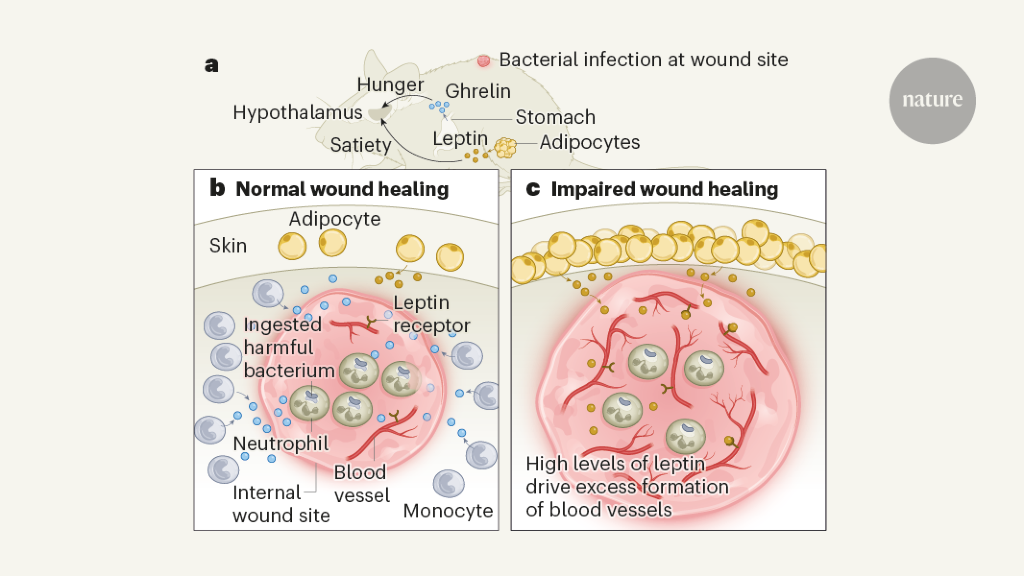
As has been stated, ghrelin levels in CRBI rats decreased. However, the expression levels of GHS-R1a in tissues were not studied. Using immunohistochemistry (IHC), we occasionally observed decreased levels of GHS-R1a in hypothalamus of CRBI rats, which returned to normal after ghrelin administration (see Supplementary Fig. S2). We previously discussed that over-activation of HPA may have led to GR decrease and GCR. Thus, GR increase in CRBI rats after ghrelin treatment was possibly associated with the inhibition of HPA through up-regulation of GHS-R1a in hypothalamus47. Therefore, the anti-inflammatory and wound healing properties of ghrelin were possibly strongly associated with up-regulated GHS-R1a levels. It has been established that the stimulation of the vagus nerve inhibits the inflammatory response in burned mice and also blocks the release of proinflammatory cytokines (TNF-α, IL-6 and IL-1β) from lipopolysaccharide-induced peritoneal macrophages (LPS)48. In a rat model of sepsis, ghrelin was thought to suppress inflammation indirectly, by inactivating the sympathetic nerve and, thus, activating the vagus nerve49,50, involved in the regulation of ‘cholinergic anti-inflammatory pathway’51. Additionally, cervical sympathetic block (CSB) was previously used as an effective measure to treat CRBI in our institute1. CSB significantly improved the survival of CRBI mice mostly by decreasing the overexpression of TNF-α, IL-6 and IL-1β. Given these, we speculate that the anti-inflammation property of ghrelin was also partly achieved by regulating the excitatory balance between the sympathetic nerve and vagus nerve. Ghrelin was identified as non-effective in directly decreasing the proinflammatory cytokines secreted by peritoneal macrophages stimulated by LPS50. However, studies also showed that ghrelin decreased the proinflammatory cytokines produced by RAW264.7 macrophages treated with LPS in a dose- and time- dependent manner52. Our previous study also showed that the levels of proinflammatory mediators in supernatants of cultured peritoneal LPS-induced macrophages decreased after treatment with different doses of ghrelin (see Supplementary Fig. S3). Therefore, we suspect that ghrelin suppresses inflammation through activation of vagus nerve and direct interaction with peritoneal macrophages, namely, through neurohumoral regulation (see Supplementary Fig. S5).
Added by: Dr. Enrique Feoli Last edited by: Dr. Enrique Feoli |